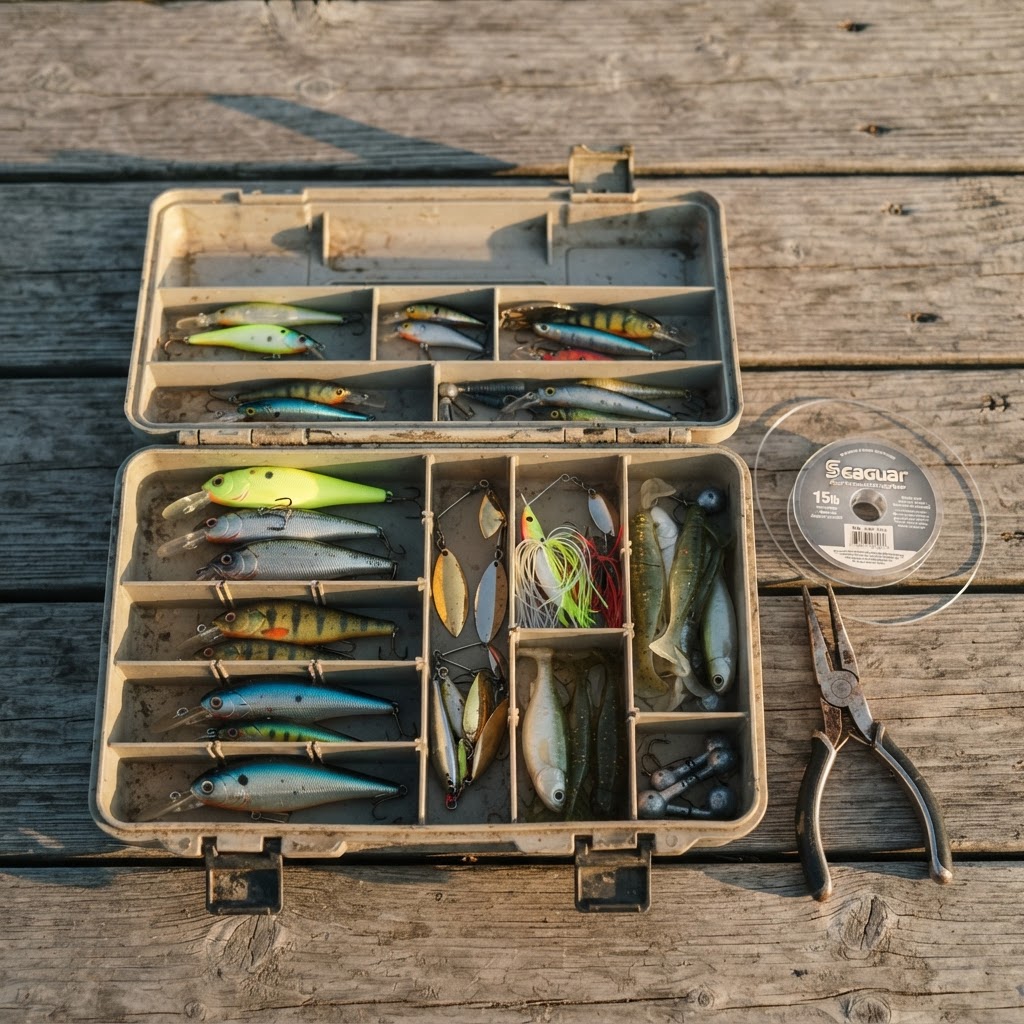
Most anglers buy crankbaits by color. The fish care far more about depth. A bait that runs two feet above a school is a decoration; the same bait running through the school catches fish.
Depth is set by the lip, the line and the cast
A longer, steeper lip dives deeper. Shorter, wider lips dive shallow and wobble harder. A manufacturer's stated running depth assumes a specific line size, a long cast and a steady retrieve, so treat the number as a guide.
- Thinner line lets a bait run deeper.
- A longer cast lets it run deeper and stay there longer.
- A faster retrieve pushes it deeper; a slow one lets it rise.
Build three bands, not a collection
A workable crankbait set is one bait for each of three bands:
- Shallow, roughly zero to four feet. Weed flats, docks and shallow points early and late in the day.
- Medium, roughly five to ten feet. The most useful band on most lakes: the first break line off a flat.
- Deep, roughly twelve feet and beyond. Points, humps and channel edges, usually with a slow, deliberate retrieve.
Match the band to the structure
Find the depth where the fish are holding, then choose the bait that reaches it and can be fished cleanly. If you are constantly snagging, you are too deep for the bottom; switch to the shallower bait rather than changing colour.
When to change colour
Colour matters after depth and speed are right. Natural baitfish colours in clear water, brighter or darker patterns in stained water, and dark silhouettes in low light are reliable starting rules. Change one variable at a time so you learn something from every adjustment.

FINN'S FISHING TIP
Take one idea from this page onto the water. One you will actually use beats five you will forget.