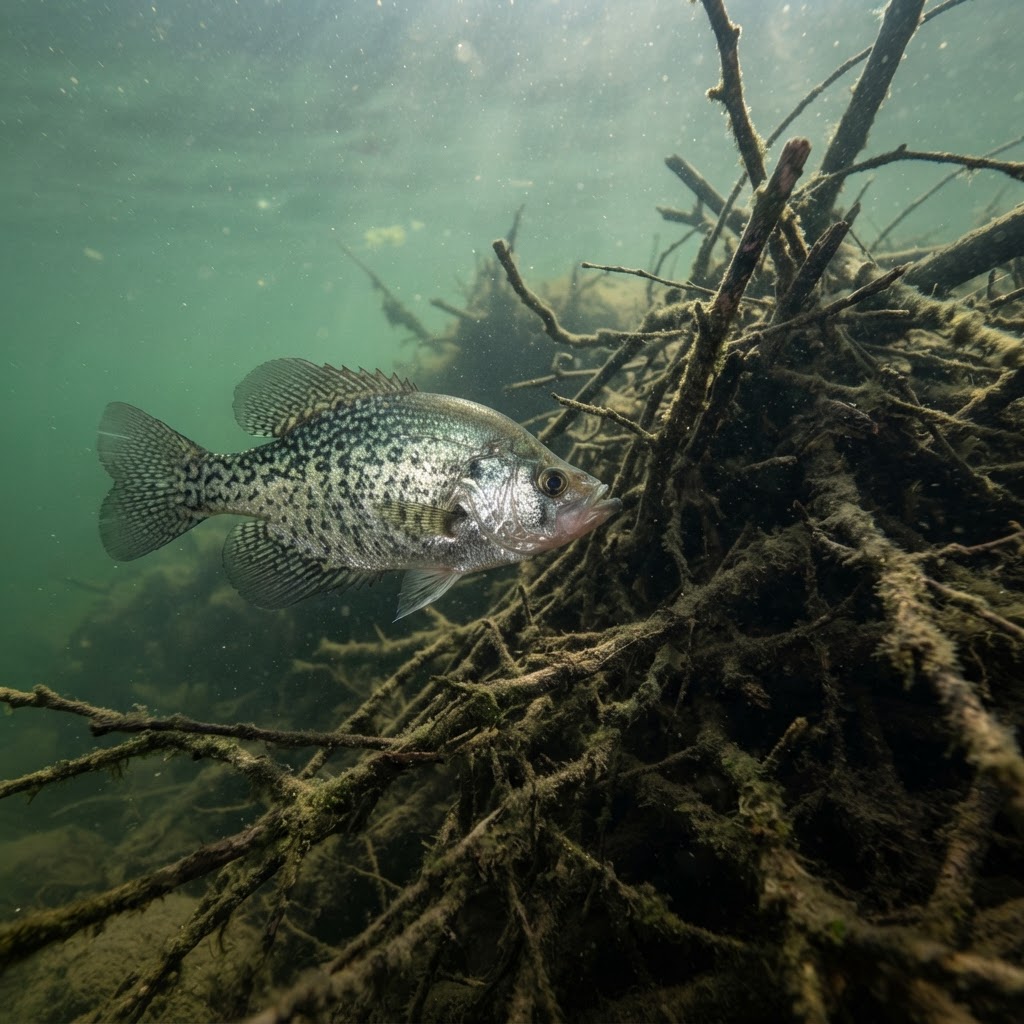
Crappie are social fish. Where you find one, there are usually several, and they will hold tight to cover rather than roam. That makes them predictable, which is a gift if you are willing to be precise.
Find the cover, then find the depth
Brush piles, standing timber, dock pilasters, stake beds and rock ledges all hold crappie. What changes through the year is the depth of the fish within that cover. In spring they are shallow and often suspended in the top of a brush pile. In summer they drop to the cooler, shaded lower branches. In fall they follow bait back toward the shallows.
Fish the top of the cover first. If nothing responds, work progressively deeper through it before moving on.
Small jigs, presented quietly
A one-sixteenth to one-eighth ounce jig with a small soft plastic is the standard for a reason. It falls slowly, keeps a horizontal attitude, and can be held almost motionless.
- Drop it beside the cover rather than into it, then let it settle.
- Count the fall. Repeat the exact same count every drop so you stay at the depth where fish are holding.
- Hold still. Crappie often take on the pause, and a bait that never stops moving is a bait they ignore.
Docks and shade lines
Docks concentrate crappie because they combine shade, structure and often a change in bottom. Work the shadow line first, then the pilasters, then the open water under the walkway. Skipping a small jig far back under a dock reaches fish that other anglers never touch.
Keep moving, but slowly
If a brush pile does not produce in a few minutes of careful work, move to the next one. Crappie fishing is a search pattern made of many small stops rather than one long soak.

FINN'S FISHING TIP
Take one idea from this page onto the water. One you will actually use beats five you will forget.