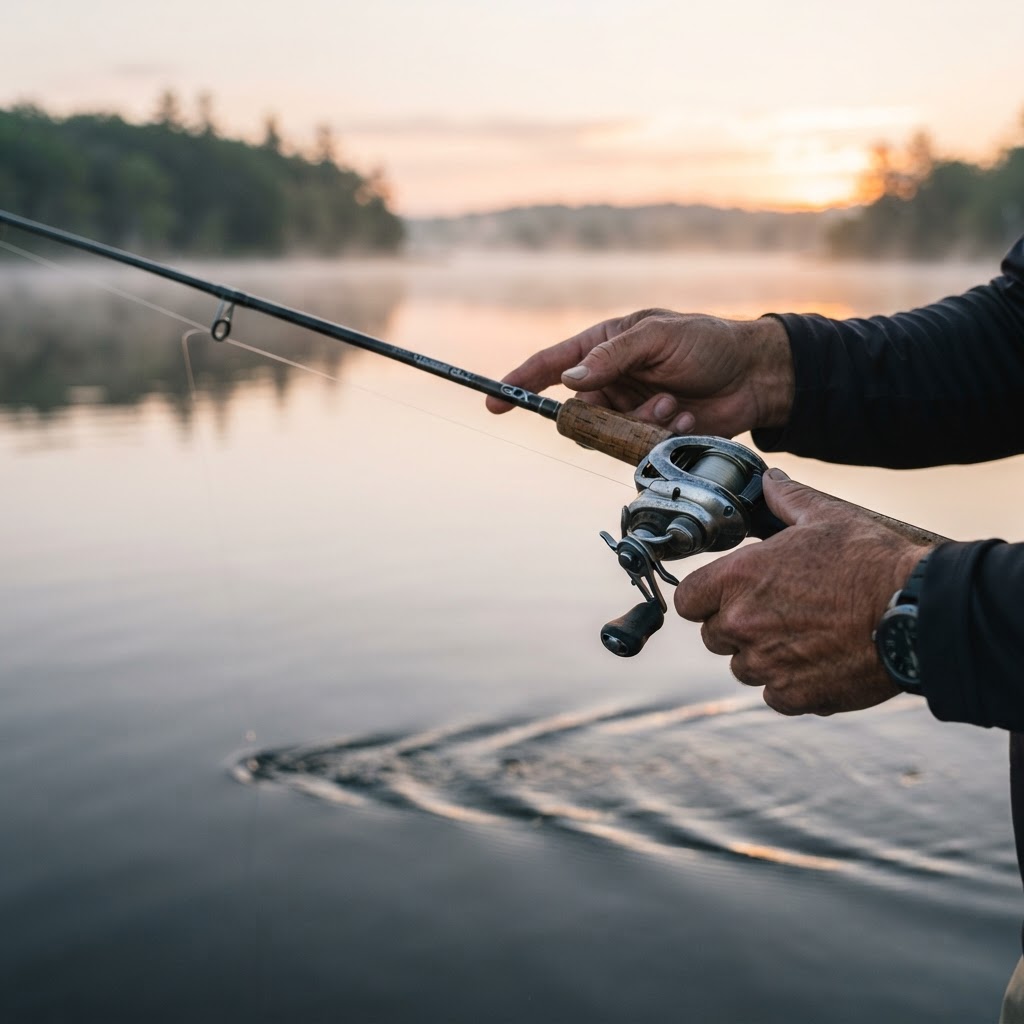
Fish do not decide whether to eat your lure based on its name. They decide based on whether it looks and behaves like something alive. Retrieve speed is how you control behaviour, and it is free to change.
Slow when the water is cold or the fish are pressured
Cold water slows a fish's metabolism, and heavy pressure makes fish suspicious. Both call for a slow retrieve: a steady crawl with the bait staying in contact with cover and a long pause now and then. If you think you are retrieving slowly, slow down further and see what happens.
Fast when fish are active and chasing
When fish are feeding on groups of baitfish, speed triggers reaction strikes. Burn a spinnerbait, rip a lipless crankbait, or snap a swimbait through the strike zone. The key is that the fish should not have time to study it.
Speed is only half the equation
A pause is what makes the speed meaningful. A steady retrieve is one constant stimulus; a fast crank followed by a dead stop changes the silhouette completely and is often what triggers a following fish.
- Slow roll: bait crawling, blades turning just enough to be felt.
- Burn: maximum speed, bait high in the water column, reaction bite.
- Twitch and pause: sharp snaps with a second or two of nothing.
Look for followers, then change one thing
If fish follow and turn away, resist the urge to change lures immediately. Add a pause, then lengthen the pause, then add a sideways twitch. Each change is a question you are asking the fish. When something works, repeat it exactly on the next cast.
Control your cadence
Consistency is a skill. Pick a rhythm and hold it for the whole cast. A retrieve that speeds up and slows down without intent looks like nothing in nature, and fish ignore it.

FINN'S FISHING TIP
Take one idea from this page onto the water. One you will actually use beats five you will forget.