A low-light fish under a low-light season
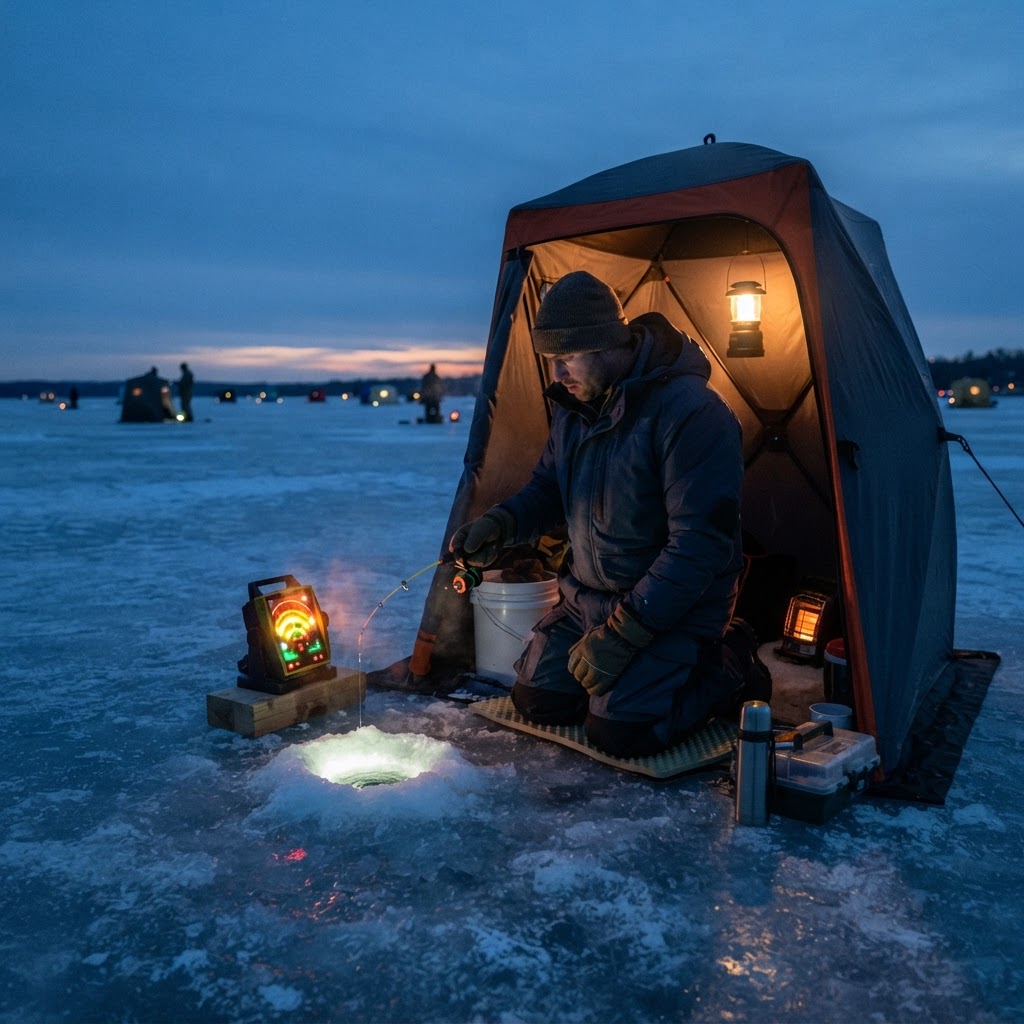
Walleye are built for dim conditions. Their eyes reflect light in a way that lets them feed at night and in stained water, and the Missouri Department of Conservation notes that they retreat to deeper water by day and move shallower at night. That single habit explains most winter walleye fishing: you are either fishing deep during daylight or fishing shallow at dawn, dusk and after dark.
Ice simply compresses the schedule. The fish still respond to light, and the best windows are still the low-light ones.
Where to look
Walleye winter locations come down to three kinds of structure:
Rocky points and humps. In reservoirs and natural lakes, walleye use hard bottom transitions where rock meets softer substrate. The MDC field guide describes spawning on gravel shoals, rocky points and along rocky dam faces, and hard bottom remains a travel route through winter.
Channel edges and drop-offs. In reservoirs, the old river channel is a highway. Fish sit on the edge where the flat meets the fall, not in the middle of either.
Deep basins adjacent to shallow flats. Fish rest deep and slide shallow to feed. A hole drilled on the break between the two covers both.
Map work pays here. Look for contour lines that bunch tightly, inside turns of a channel, and humps that rise a few feet above the surrounding basin. Those are the places a walleye can hold with minimal effort and ambush whatever moves past.
Presentations that work through a hole
Jigging spoons and jigging baits are the workhorses. A spoon that flutters and then swings back under the hole triggers reaction strikes from fish that will not chase a slow bait.
A jig and minnow is the traditional option, and it is still the most reliable way to convert lookers. Hook the minnow through the lips or behind the dorsal so it stays lively and hangs naturally.
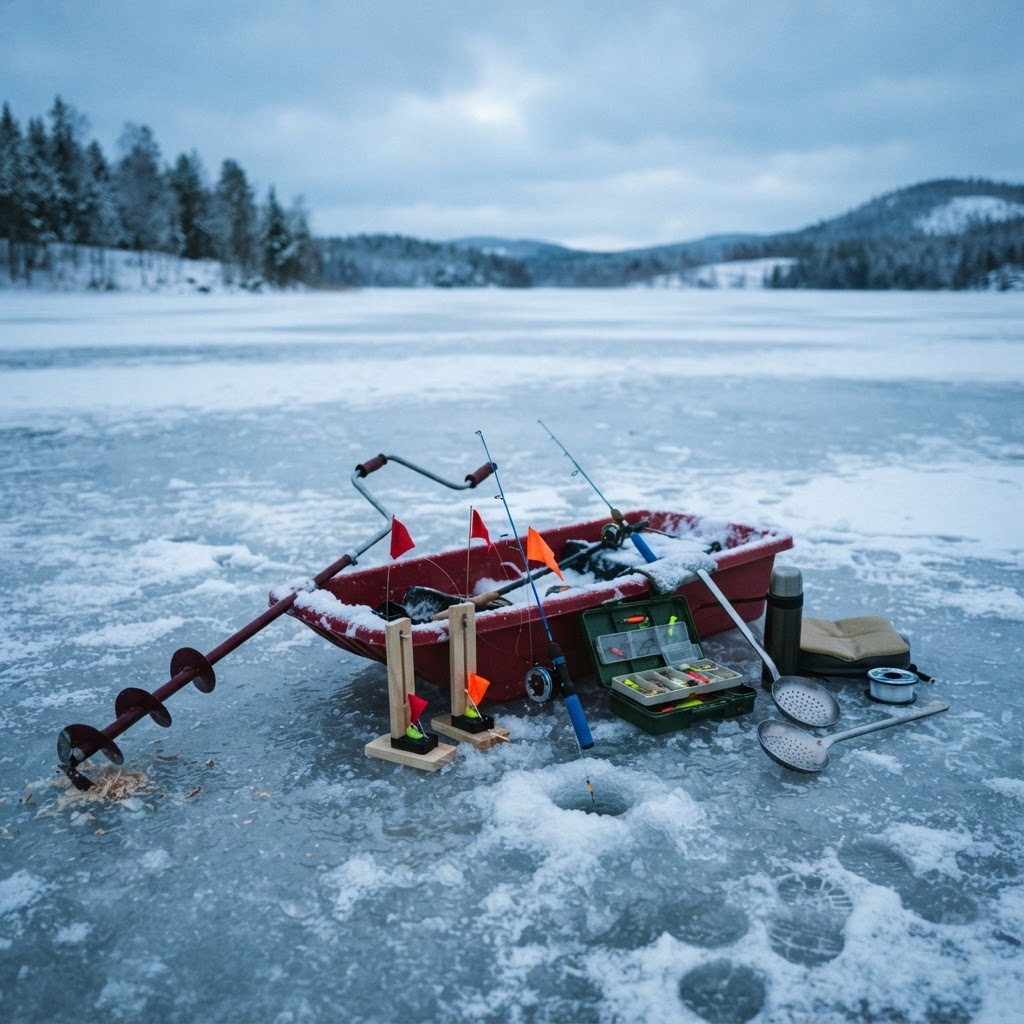
Tip-ups or set lines let you cover several depths at once, which matters because walleye often cruise above the bottom rather than sitting on it. Check your state's rules on the number of lines and tip-up marking before you set anything.
Flutter and pause. The cadence that produces walleye is rarely a fast jig. Lift the bait a foot or two, let it fall on a semi-tight line, pause, then lift again. Watch a flasher closely: a mark that rises to the bait and stops is often a fish inspecting it, and the strike usually comes on the pause or the next lift.
Electronics change the learning curve
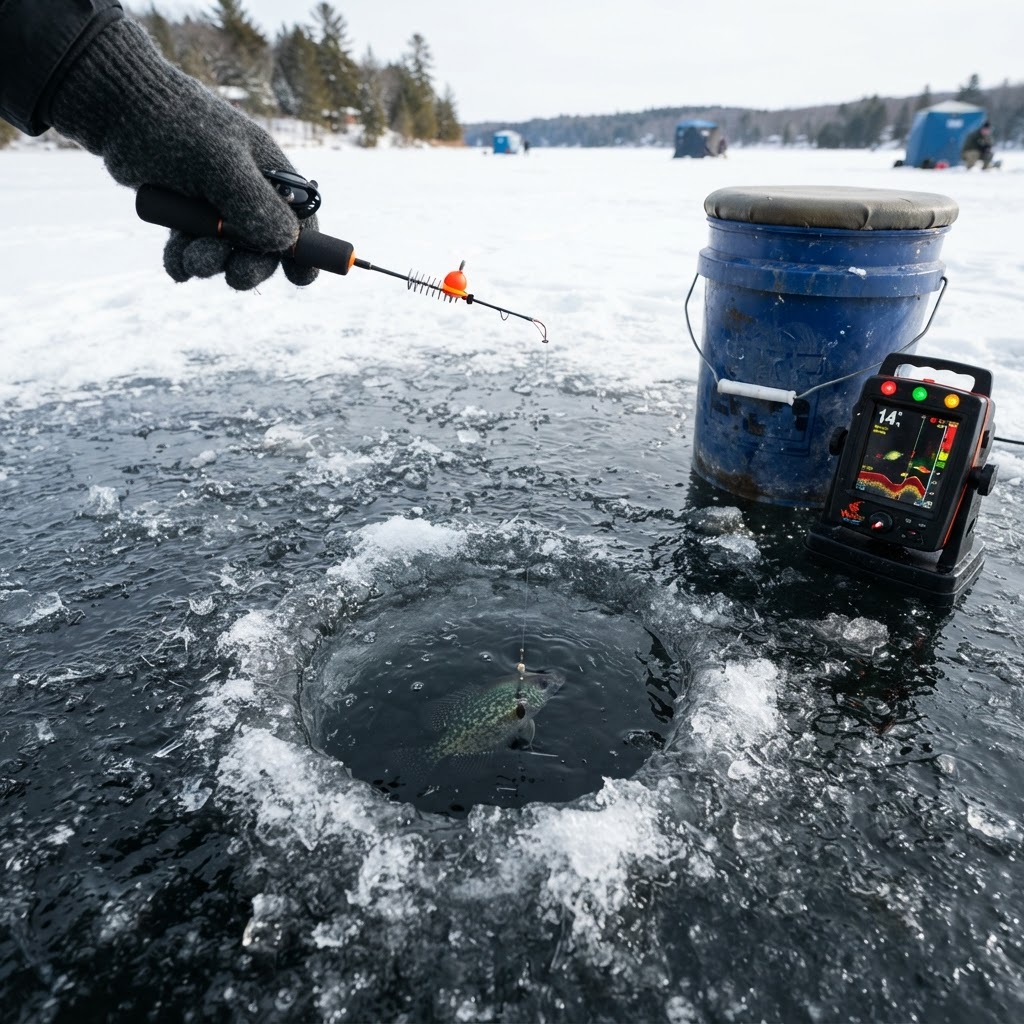
A flasher or sonar does two jobs under ice. It tells you the depth and it shows you whether a fish is in the cone. Even a basic unit lets you see a walleye rise off the bottom to inspect a bait, which is the moment where most winter walleye are caught or missed.
Read the display literally. A hard red bottom line is rock or hard pan; a thicker, softer band is mud or soft vegetation. Fish tight to the bottom show as marks that lift off when your bait approaches.
Timing and weather
The first and last light of the day remain the strongest windows. Stable, cloudy weather tends to hold fish shallower and more active than a bright high-pressure day, when they often pull back to the deepest part of the break. A pressure drop ahead of a front can produce a short, intense bite; the hours after a hard cold front passes are usually slower.
None of that is a promise. On any given water, the fish tell you faster than a forecast does, which is why drilling several holes across a break beats sitting on one.
Safety and regulations
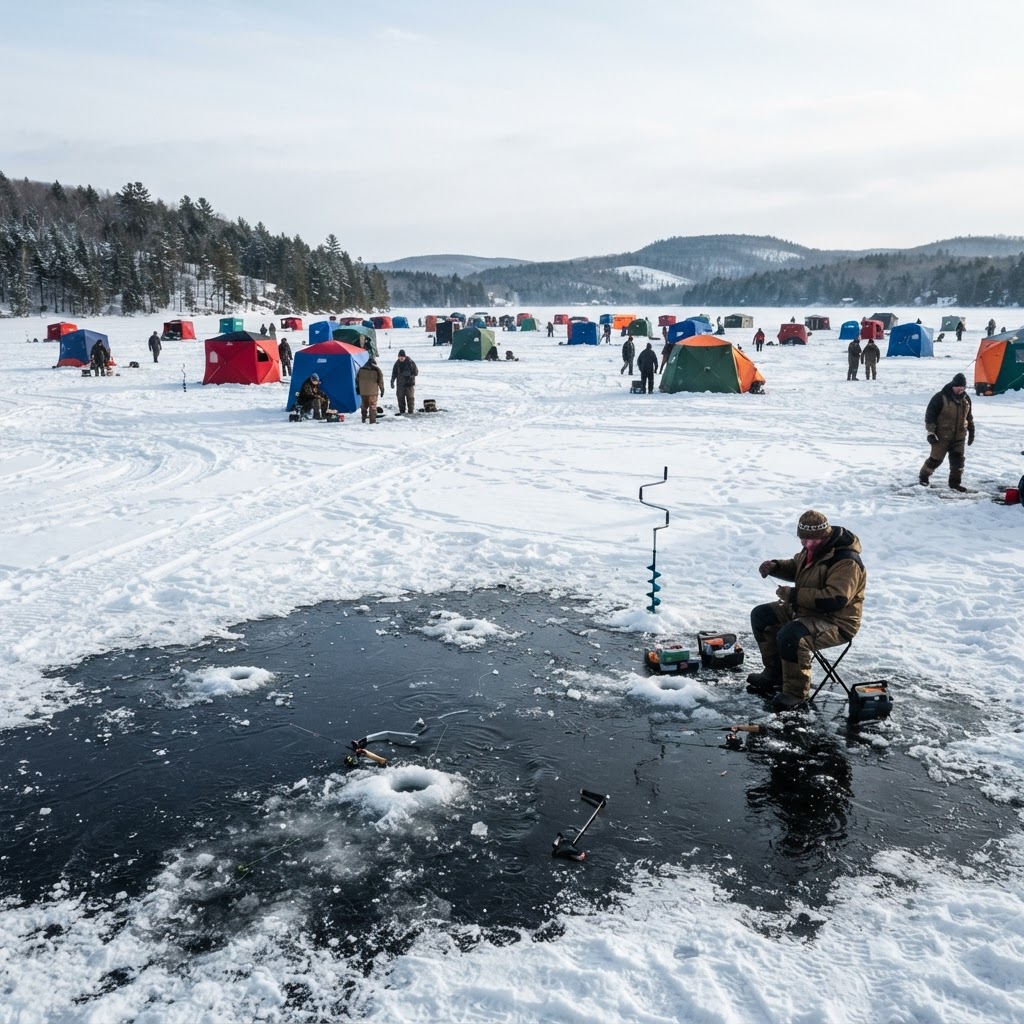
Winter walleye fishing often means fishing at dawn, dusk or in the dark, which makes the walk on and off the ice the riskiest part of the trip. Minnesota DNR's ice safety guidance applies in full: there is no completely safe ice, four inches of new clear ice is the minimum for a person on foot, and thickness must be checked as you travel, with a light and a partner.
Walleye seasons, minimum sizes and daily limits are set by each state and often differ between waters, especially where walleye are stocked or where protected slot limits apply. Check your state agency's current fishing regulations for the water in front of you rather than any general number.
Key takeaways
- Walleye feed best in low light and hold deeper by day, shallower at night.
- Rocky points, channel edges and humps rising from deep basins are the core locations.
- Jigging spoons and a jig with a minnow cover reaction and finesse presentations.
- Watch the flasher for fish rising to inspect; the strike usually comes on a pause.
- Fish early, late and through cloud cover; expect a slower bite after a hard front.
- Check seasons, slot limits and line limits for the specific water, and treat ice as unverified until measured.
Related Fishy Lips guides
FINN'S FISHING TIP
Take one idea from this page onto the water. One you will actually use beats five you will forget.