The fish that punishes a careless hand
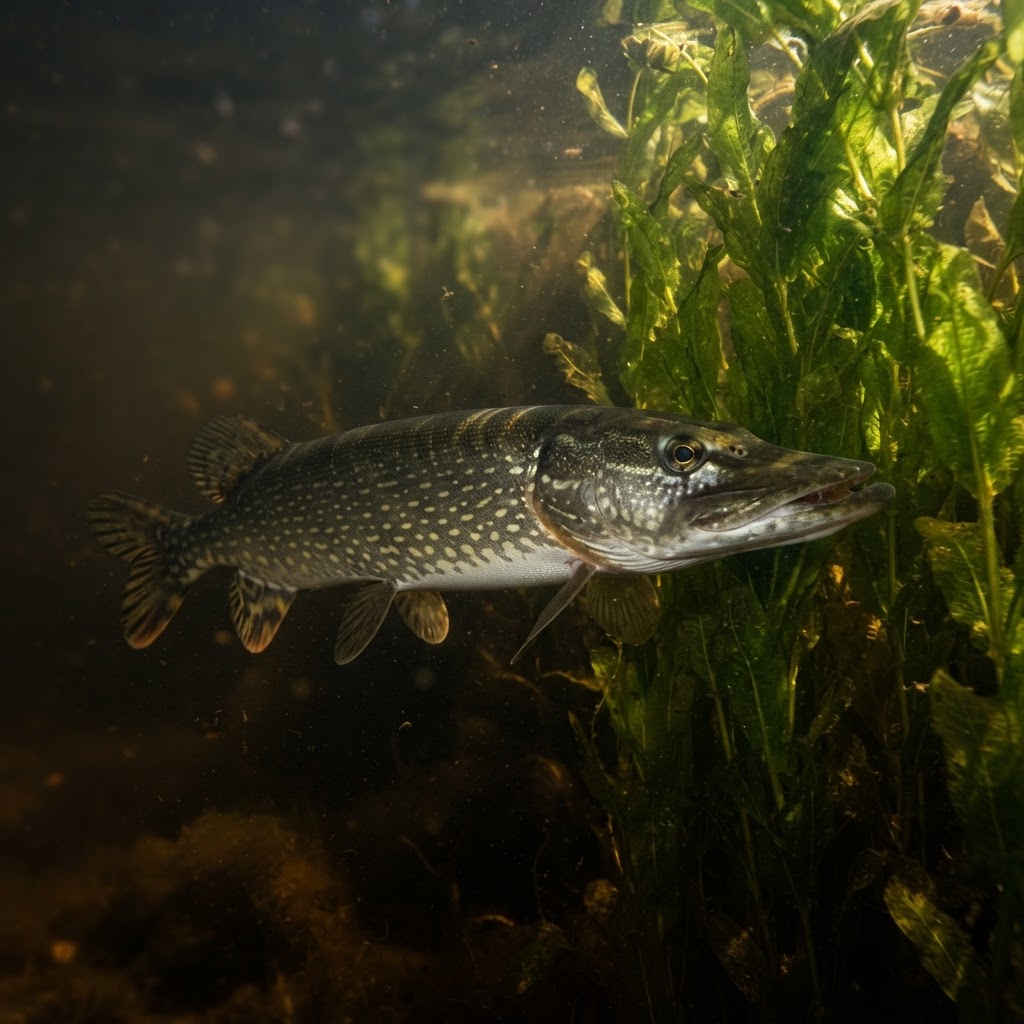
Northern pike are ambush predators with a mouth full of backward-pointing teeth, and they are usually hooked near the front of that mouth. Add a thrashing fish, a treble hook and a wet boat deck, and you have one of the most common injury scenarios in freshwater fishing. Good pike handling is not sentimentality. It is technique that protects the fish and your fingers.
Pike are also a heavily managed species in many waters, with size limits, protected slots, seasons and, in some places, harvest restrictions. Because pike are often released, the release has to be good for the regulation to mean anything.
Gear that makes release easier
Handling starts before the fish is hooked.
- Use a heavy enough leader. A fluorocarbon leader of 30 pounds or more, or a wire leader where allowed, reduces bite-offs and lets you land fish quickly.
- Consider single hooks or barbless trebles, especially on spoons and large plugs. They hook well and come out fast.
- Carry long forceps, a jaw spreader and a quality hook cutter. These three tools solve almost every pike hook problem.
- Use a large, rubber-mesh landing net. A knotted nylon net damages eyes and gill plates and tangles hooks; rubber mesh does neither.
- Wet the net and the mat. A wet, soft surface protects the fish's slime layer, which is its first defense against infection.
Landing and unhooking
Keep the fish in the water in the net while you get your tools ready. Do not lift a pike by the leader alone, and never lift it vertically by the jaw.
For unhooking:
- Leave the fish in the net, in the water, and wait for it to calm.
- Use long forceps to back the hook out the way it went in. If it will not come, cut the hook.
- A jaw spreader helps on a deeply hooked fish, but use it gently and only briefly.
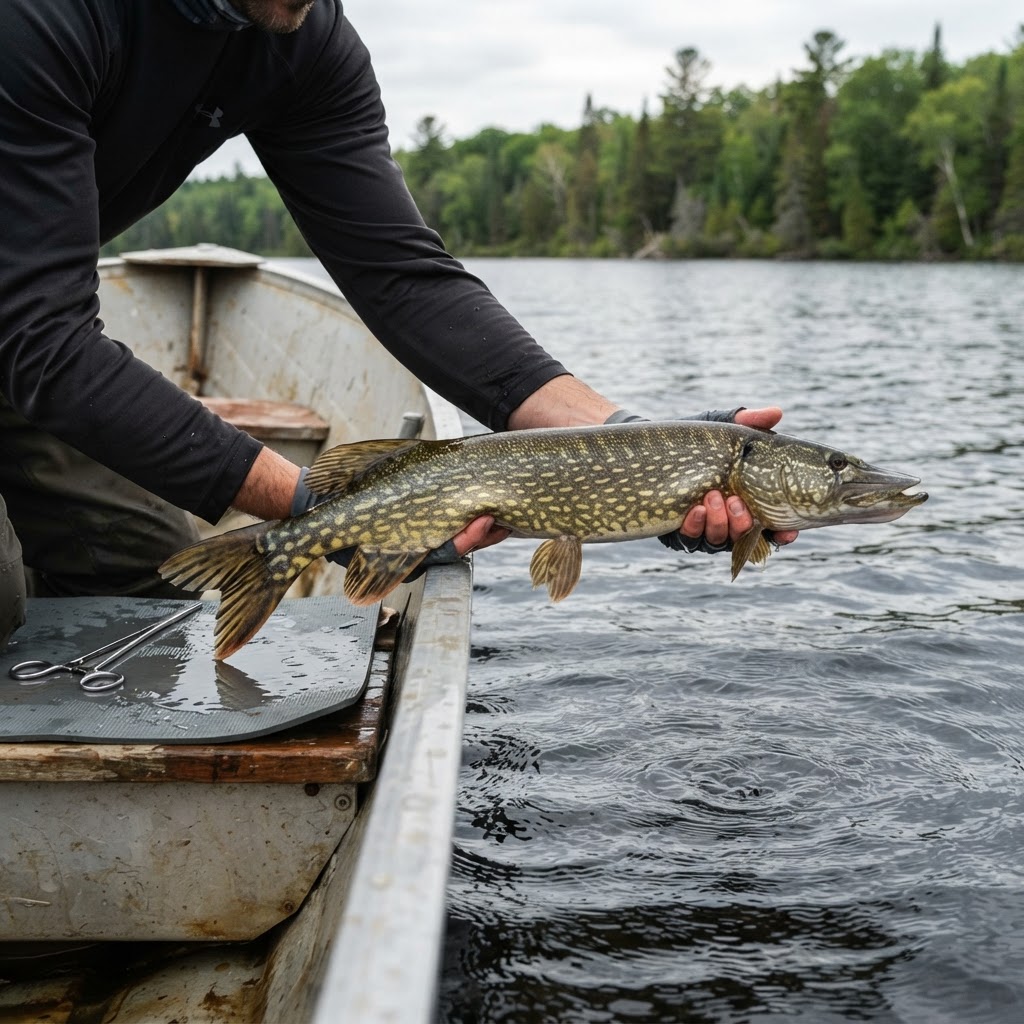
- Support the fish under the belly with a wet hand while you work. A pike's body is long and unsupported weight can strain its organs.
If a fish is hooked in the gills or deeply in the throat, cut the line as close as you can and release it. One exception: if the fish is bleeding heavily or cannot right itself, and keeping it is legal on that water, keeping that fish is the better outcome — several state agencies advise exactly that. Cutting the line and leaving the hook in the mouth is a recognized option and generally does less harm than tearing the hook out; a hook ripped out of a gill is usually fatal.
Holding a pike correctly
If you want a photograph, do it quickly and safely: one wet hand under the belly just behind the pectoral fins, the other lightly supporting the head from underneath — never gripping the eye sockets or the gill plate. Keep the fish horizontal. Do not hang a pike by the jaw; its long body cannot take that weight.
Keep air exposure to a few seconds, and have the camera ready before the fish comes out of the water. A pike held up for a slow phone unlock is a fish under unnecessary stress.
Reviving and releasing
Hold the fish upright in the water, head into any current, and let it breathe and recover. It should hold itself level and then swim away strongly. If it rolls over, keep supporting it. On warm days, recovery takes longer and the fish is more stressed; consider not targeting pike at all when the water is at its warmest, as they are a cool-water species.
Never throw a fish back, and never release one from a height into the water.
The places where handling actually goes wrong
Most pike injuries happen in three predictable moments: reaching into a net full of trebles, lifting a fish by the leader, and trying to hold a fish still on a hot, dry deck. Plan those three moments before you cast. Lay out the net, wet the mat, get the forceps out of the bag, and clear the deck of loose baits.
On ice, the same rules apply with colder hands and a slippery surface — keep the fish on a wet mat or in the hole, and never let it freeze to the ice.
Fishing in a way that reduces damage
You can also choose tackle and techniques that hook pike more safely. Larger single hooks on spoons, in-line spinners with a single replacement hook, and topwater baits fished on heavy line all tend to hook fish in the jaw rather than deep. If you are catching many small pike, upsize the lure rather than hooking the same fish repeatedly on a small bait.
Avoid targeting pike in the warmest shallows in midsummer. Cold, well-oxygenated water is where a released pike does best.
Rules worth checking
Pike regulations differ sharply by state and water: minimum sizes, protected slots, closed seasons, and sometimes a limit on how many may be kept above a certain length. Some jurisdictions also restrict the use of wire leaders, bait, or certain hook types. Check your state fish and wildlife agency before you fish, and confirm whether the water has its own rules.
Key takeaways
- Plan the unhooking before you cast: net, mat, long forceps, jaw spreader, cutters.
- Keep pike in the water and support the body; never hold one vertically by the jaw.
- Cut a deeply set hook rather than tearing it free.
- Keep air exposure to a few seconds and revive the fish upright before release.
- Cool water and single hooks reduce stress and injury; check local size and season rules.
Sources and further reading
The handling advice follows the Minnesota DNR catch and release page directly, including cutting the line on a deep hook and not releasing a fish that is bleeding heavily or cannot right itself. Pike seasons and limits are state rules.
- Minnesota DNR — Catch and release
- Wisconsin DNR — Fishing regulations
- Minnesota DNR — Fishing regulations
Keep reading
FINN'S FISHING TIP
Take one idea from this page onto the water. One you will actually use beats five you will forget.