The beach is a structure you have to read
Surf fishing looks like casting into empty water. It is not. A beach has bars, troughs, cuts and points, and the fish are almost always in the places where moving water meets a change in depth. The rod, rig and bait you choose should match the structure you can see.
This guide covers the equipment and the reading. Tide timing is covered in Understanding Tides and Their Effect on Fishing.
Rod and reel
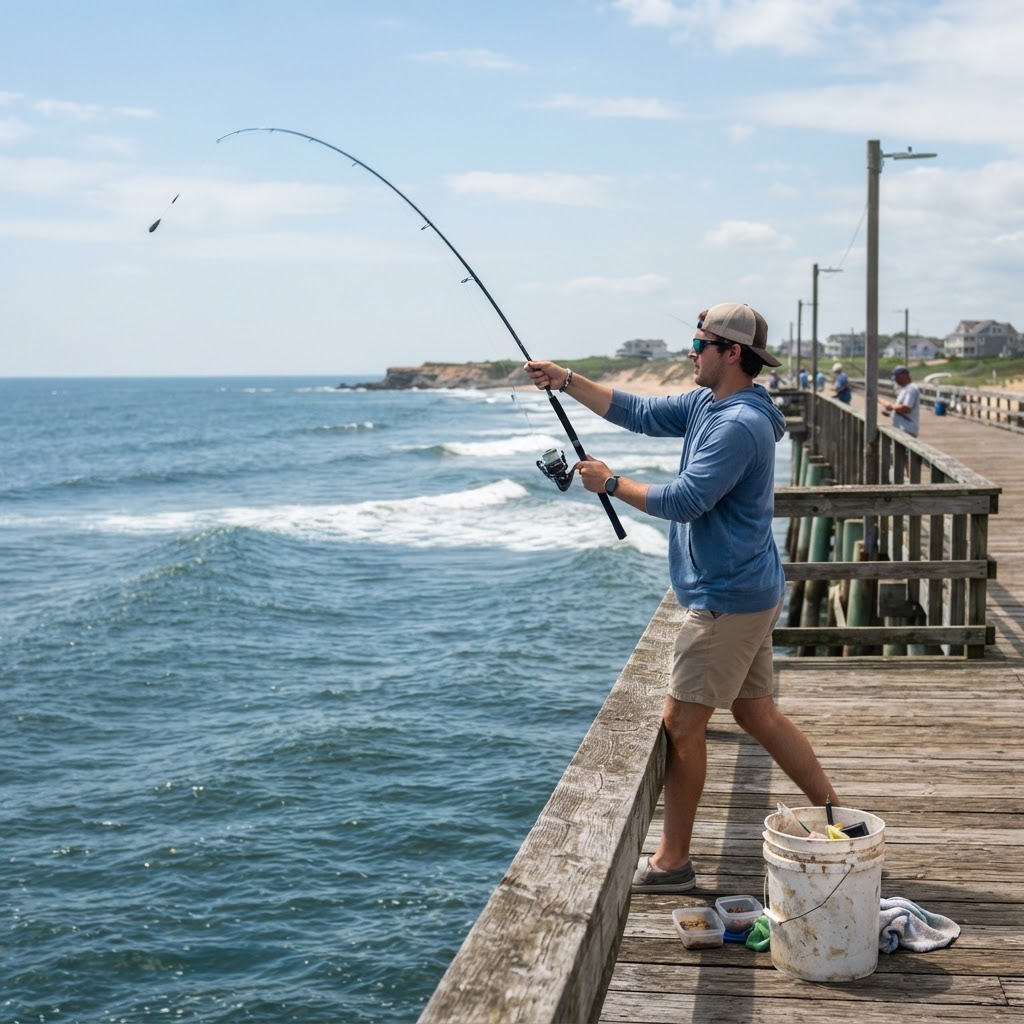
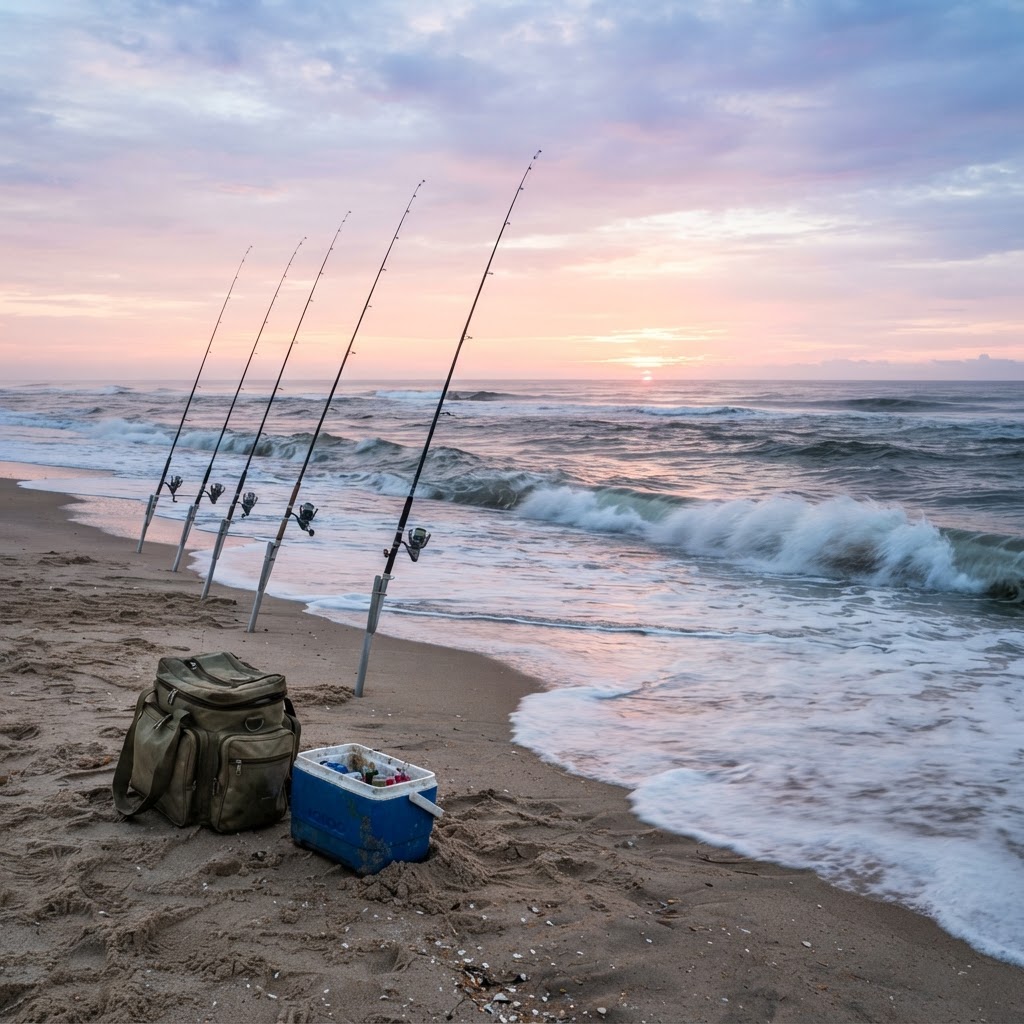
Surf rods run long for two reasons: distance and line height above the wash. A nine to twelve foot rod rated roughly two to six ounces is the standard range, and most anglers are best served by the shorter end unless they routinely face a wide, shallow beach.
Pair it with a spinning reel in the 4000 to 6000 size class, filled with twenty to thirty pound braid. Braid gives casting distance and bite sensitivity; its lack of stretch is also why you need a leader.
The shock leader matters. A length of thirty to fifty pound monofilament joined to the braid takes the strain of the cast and the abrasion of sand and shells. Without one, a heavy cast or a fish running along a bar will part the braid.
Sinkers and rigs
Surf fishing needs weight to hold bottom in moving water. Sinkers are chosen by current, not by habit:
- Pyramid sinkers dig into sand on a moderate beach.
- Sputnik or breakaway sinkers hold in stronger current and surf.
- Bank or disc sinkers roll along the bottom in heavy wash, which can be an advantage.
Two rigs cover most situations:
The fish finder rig slides a sinker on the main line above a swivel, with a leader to the hook. A hooked fish takes line without dragging the weight, which is why it is the most common surf rig on the Atlantic and Gulf coasts.
The high-low rig carries two hooks above the sinker. It fishes two levels and suits smaller baits and bottom-feeding species.
Circle hooks are worth using everywhere: they hook fish in the corner of the mouth, which reduces injury and makes release easier. Some fisheries require them.
Bait
- Cut mullet, menhaden or bunker: the workhorse baits, oily and durable
- Shrimp: fished whole or halved, best on a small hook
- Sand fleas: gathered from the wash line, excellent for pompano and whiting
- Bloodworms and squid: less available, both effective
- Artificial: metal spoons and bucktail jigs for bluefish, striped bass and mackerel when baitfish are present
Fresh beats frozen. Bait that has been in a cooler for a week loses the scent and texture that make it work.
Reading the beach
Stand back and look at the water before you rig up.
- Sandbars show as lighter, shallower water, sometimes breaking waves.
- Troughs are the darker lanes between the bar and the shore, and they are where fish travel.
- Cuts and rips are gaps in a bar where water drains; fish wait on the edges of the outflow.
- Points and jetties create current and structure.
- Birds and bait sprays are the clearest signal of all.
Cast into the trough, not onto the bar. Cast past the bar and work the bait into the deeper water behind it if you can reach.
Timing and conditions
Most surf anglers fish a rising or falling tide rather than slack water, and dawn and dusk are strong windows. Onshore wind builds surf and colour, which helps some species and ruins the presentation for others. Check the marine forecast for wind and surf height before driving to the beach, and watch NOAA's coastal water temperature data to know what the season is doing.
Safety on an open beach
Surf fishing puts you in the wash line, often in the dark, often alone.
- Learn what a rip current looks like and swim parallel to shore if caught in one, as described by the National Weather Service's rip current guidance.
- Never turn your back on the ocean while baiting up or unhooking a fish.
- Wear a PFD if you fish from rocks or a jetty.
- Carry a headlamp, and tell someone where you are fishing.
- Watch for sneaker waves, which the National Weather Service lists as a hazard that can pull beach walkers into the surf, and for rising tides cutting off access to a point.
Regulations and access
Surf fishing usually requires a saltwater licence, and some states require a free registry or an endorsement. Beach access often requires a vehicle permit, and certain beaches forbid fishing in swimming areas or during posted hours. Check both the fishery rules and the beach rules before you go.
Key takeaways
- A nine to twelve foot rod, a 4000 to 6000 reel, braid and a shock leader is the standard surf outfit.
- Choose sinkers by current, and use a fish finder rig for most bait fishing.
- Fresh cut bait outperforms frozen, and circle hooks reduce release injury.
- Fish troughs, cuts and the edges of sandbars, not the shallow bar itself.
- Moving tide plus dawn or dusk is the strongest combination.
- Rip currents and rising water are the two hazards that end surf trips badly.
Related Fishy Lips guides
FINN'S FISHING TIP
Take one idea from this page onto the water. One you will actually use beats five you will forget.