The best first fish in freshwater
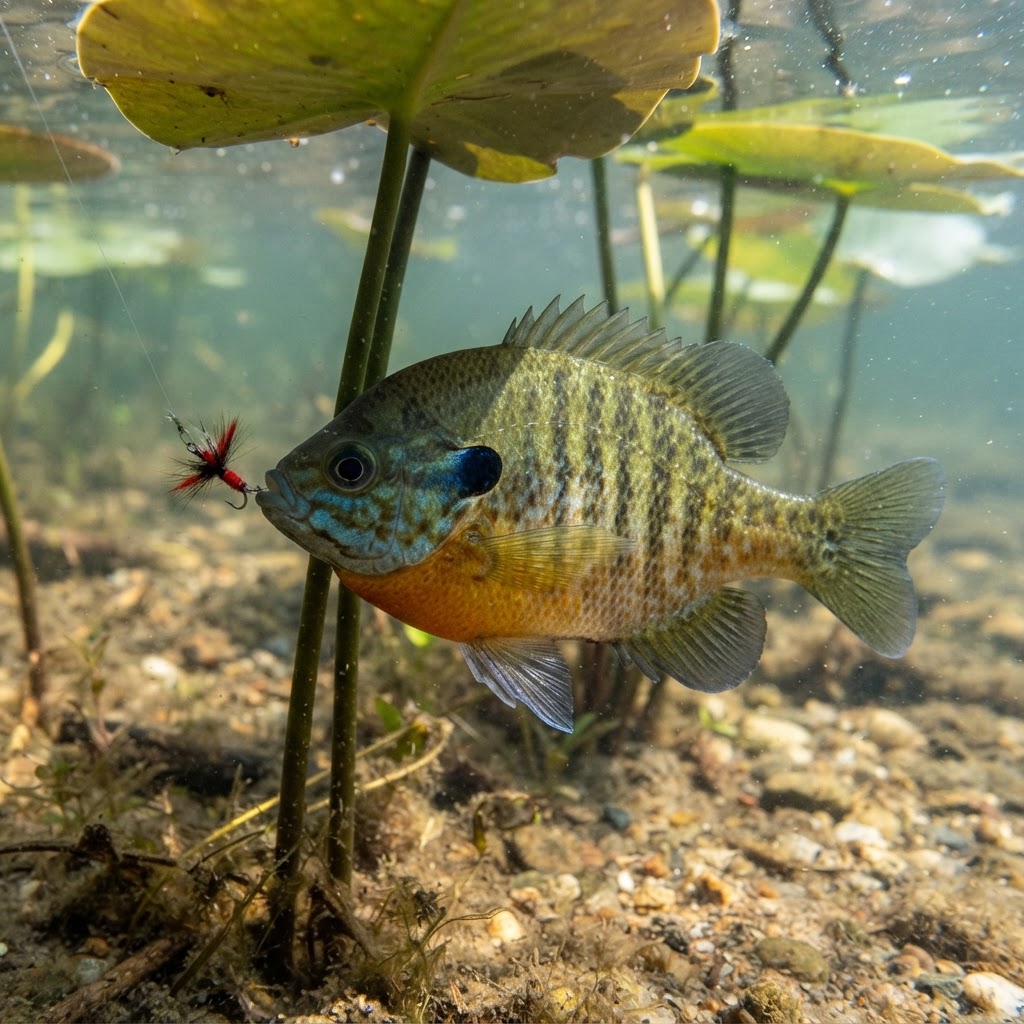
Bluegill are abundant, willing, and found in almost every pond, lake and slow river in the country. They are also beautiful, hard-fighting for their size, and excellent on a light rod. If you are learning to fish, or teaching someone else, bluegill are the fish that make the day work.
This guide covers the simple version: a float, a hook, a bit of bait, and enough understanding of where bluegill hold to find them on a new pond.
Where bluegill live
Bluegill are cover fish. They use shallow weeds, submerged brush, dock pilings, lily pads, and the shaded edges of banks. They also relate to depth changes, particularly the first drop off a shallow flat, and they will suspend over deeper water in the heat of summer.
They prefer quiet water to strong current and they tolerate warm, weedy ponds that would frustrate other species. Small water is often better than big water: a farm pond with green edges can hold more bluegill per acre than the lake down the road.
The simplest rig that works
A slip bobber or a small fixed float, a split shot, a hook and bait is all you need.
- Rod: a light or ultralight spinning rod, 5' to 6'6". Ultralight gear makes a six-inch bluegill feel like a good fish.
- Line: 4- to 6-pound monofilament is plenty and casts small baits well.
- Float: a small float that a bluegill can actually pull under.
- Hook: a size 6 to 10 hook, depending on bait. Small hooks catch more panfish and are kinder to released fish.
- Bait: a piece of nightcrawler, a few waxworms, a small cricket, or a tiny piece of bread or corn. Use a piece, not a whole worm.
Set the float so the bait sits a foot or two above the bottom, or just above the top of the weeds. If you do not know the depth, cast out and adjust until you find it.
Small jigs and tiny lures
Bluegill will also take a small jig or a tiny spinner, and on pressured water artificials often out-fish bait because the fish have seen a thousand worms. A 1/32- to 1/16-ounce jig with a bit of plastic, a small curly-tail grub, or an inline spinner in the smallest available size is a good start.
Fish them slowly: a lift-and-drop under a float, or a slow retrieve just above the weeds. The strike is often a sharp tap, but bluegill also nip and nibble, so wait for the float to go under or the line to move before setting the hook.
Where to cast from the bank
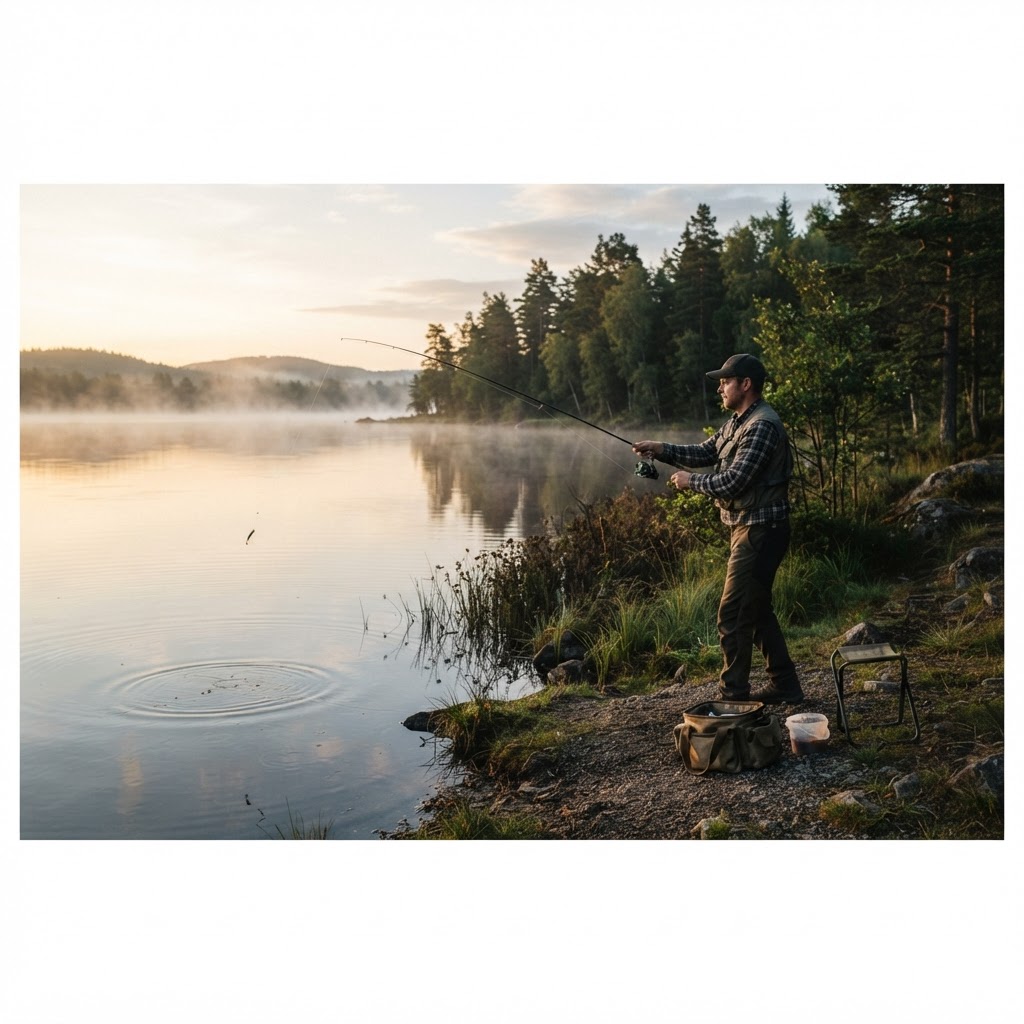
Bank fishing for bluegill is one of the easiest access points in fishing, and it is where most people start.
- Look for green edges: submerged weeds, lily pads, grass points, and the shady side of a dock.
- Fish the shadow line, especially on bright days, and the sunlit side early in the morning.
- Cast parallel to the bank rather than straight out, so the bait stays in the productive strip longer.
- Move every fifteen minutes if nothing bites. Bluegill are rarely far, but they do bunch.
Timing and weather
Bluegill feed best in warm, stable weather, and early morning and evening are the strongest windows. In late spring and early summer, when fish are on beds in shallow water, the action can be nonstop. Midsummer pushes larger fish deeper during the day, so fish early, fish the shade, or fish deeper.
After a cold front, expect fish to pull tighter to cover; downsize the bait and slow down. During the spawn, fish are shallow and aggressive but worth handling carefully — a bed is next season's population.
Handling and releasing bluegill
Bluegill are tough, but small fish damage easily. Wet your hands, support the body rather than squeezing, and use small barbless hooks if you plan to release fish. Never let a fish flop on dry ground or hot concrete. If you keep fish, chill them promptly and follow your state's handling advice.
Bluegill are also a popular fish for kids, and the best practice is the one that keeps them interested: a float that actually goes under, plenty of bait, and no long waits between bites. Keep the tackle simple and the sessions short.
Rules to check before you keep fish
Panfish rules vary. Some states have generous bluegill limits, others have daily limits per person, and a number of waters have panfish-specific restrictions, size minimums, or reduced limits. Some ponds are private water and need permission; some public waters have different rules for specific species. Check your state fish and wildlife agency's current rules, and if you are on private land, ask the owner first.
Beyond bluegill
Once you can catch a bluegill, the same float-and-bait approach catches pumpkinseed, redear, green sunfish and crappie, and larger sunfish often sit slightly deeper and further from the bank than the small ones. If you start catching a lot of tiny fish in one spot, move a few feet deeper and use a slightly larger bait to sort for bigger fish.
Key takeaways
- Bluegill live in shallow cover: weeds, brush, docks and lily pads, with a depth change nearby.
- A small float, a size 6–10 hook and a piece of worm is the most reliable setup there is.
- Small jigs and spinners work well on pressured ponds where fish have seen bait.
- Fish the shadow line and the green edge, and move if nothing bites in fifteen minutes.
- Panfish limits and private-water access vary — check the rules and ask permission.
Sources and further reading
Technique in this guide is general angling practice, not a research finding. The links above are where the rules and safety facts come from.
Keep reading

FINN'S FISHING TIP
Take one idea from this page onto the water. One you will actually use beats five you will forget.