Summer separates anglers by when they fish, not by what they own. As surface water warms and the sun climbs, fish pull into cover, go deep, or feed only in low light. The angler who is on the water at first light and off it by mid-morning usually out-fishes the one who fishes all day.
Fish the first two hours properly
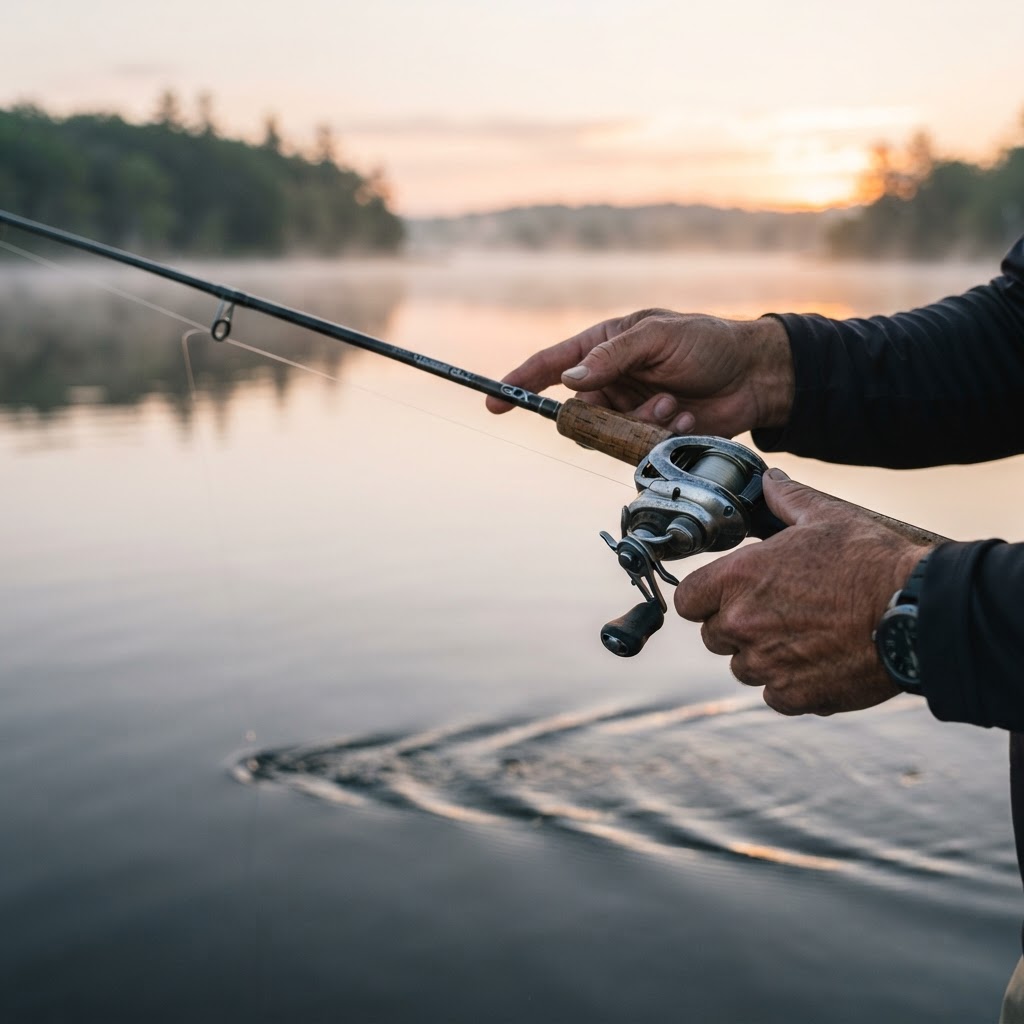
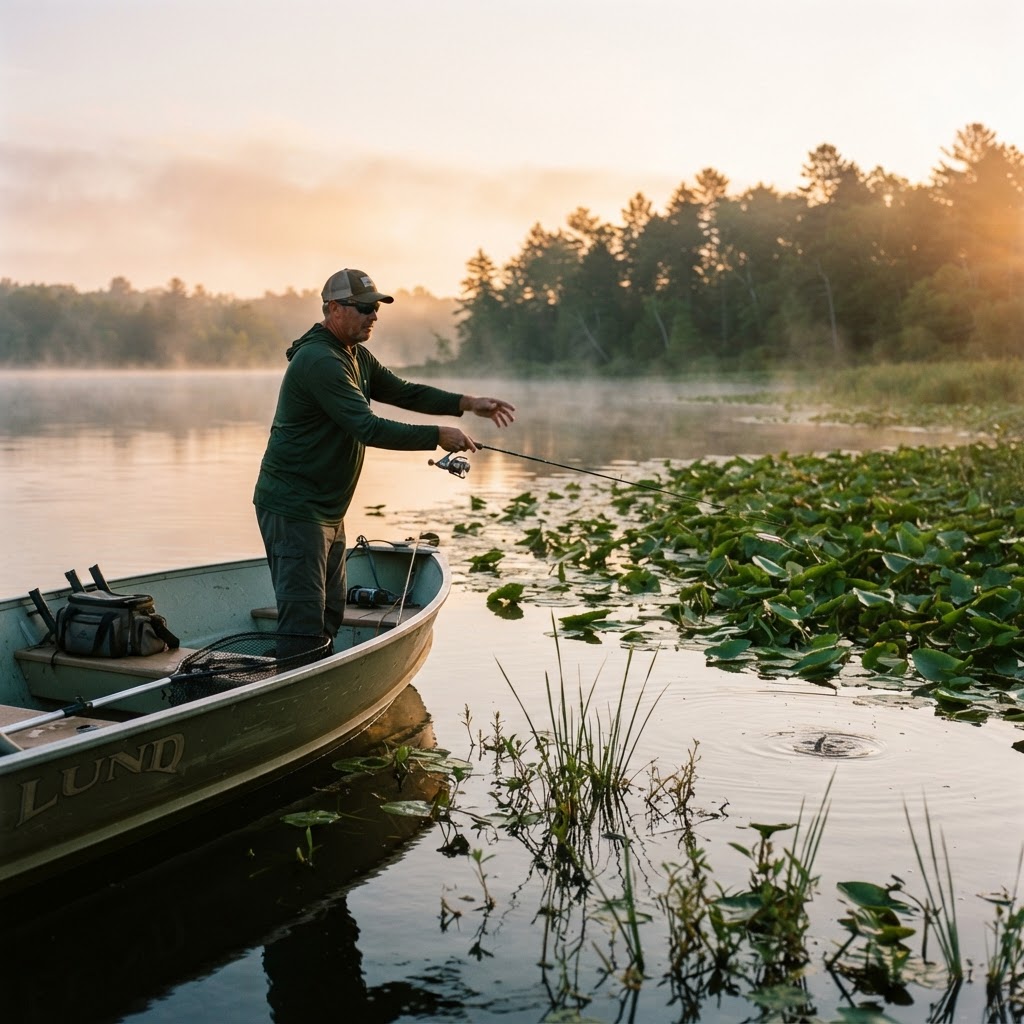
The hour around sunrise is the most reliable window of the summer. Fish shallow: flats, the inside edge of a weed line, points that catch the first light, and shade lines along docks and trees. This is topwater time, and it is worth sacrificing sleep for.
Work a surface bait with a rhythm rather than a random retrieve. Cast, walk it or pop it, pause, then move it again. When a fish boils behind the bait without taking it, leave the pause longer before the next movement rather than speeding up. Our guide to matching retrieve speed to what the fish want covers the cadence changes in detail.
Then follow the fish down
As the sun gets high, fish either bury into shallow cover with shade and oxygen, or they slide out along structure into deeper water. Both are catchable, but the deep fish are usually more willing than the shallow ones.
- Deep structure means points, humps, channel edges and rock piles. Find the depth the fish are using and put the lure in front of it: diving depth and line size decide that, which is why choosing crankbaits by diving depth matters more in summer than color.
- Heavy shallow cover means pitching something compact into shade and current, then getting the fish out quickly.
- Slow down. Fish in warm water are often willing to eat but unwilling to chase. A shaky head, a drop shot or a slow-rolled bait fished thoroughly beats a fast search.
Night fishing, done safely
Warm nights are good fishing, and they carry their own risks. Go with someone, tell a third person where you are, and plan your exit before dark. Carry a headlamp and a spare, keep your deck clean and clear of loose line and tackle, wear a light on your life jacket, and know the water well enough that you are not finding hazards by feel. Slow down on the way back: most night-trip accidents happen at the ramp or on the run home.
Heat, sun and storms
Heat illness is quiet. Drink water before you are thirsty, bring more than you think you need, and take shade breaks in the middle of the day. Wear a hat, sunglasses and long sleeves rated for sun, and use sunscreen on your hands and face; sunburn costs you more fishing than any missed cast.
Watch the sky and the radar through the day. Summer storms build quickly, and a boat in open water is the worst place to be when they arrive. When thunder is close enough to hear, get off the water, not just to the far bank.
Handle fish fast in warm water
Warm water holds less oxygen, so a long fight or a long time out of the water does real damage. Land fish quickly, support the body, keep hands and the mat wet, and get the fish back in the water without a photo session that lasts. If you are keeping fish, follow the regulations for the water and the season. If you are releasing, do it promptly.
A summer day that works
First light: topwater on shallow cover. Mid-morning: move out to the nearest deep structure and work it slowly. Midday: shade, water, food, and a break rather than a wasted hour in the sun. Late afternoon: back out to the points for the last two hours. That rhythm is worth more than any single lure in the box.

FINN'S FISHING TIP
Take one idea from this page onto the water. One you will actually use beats five you will forget.